
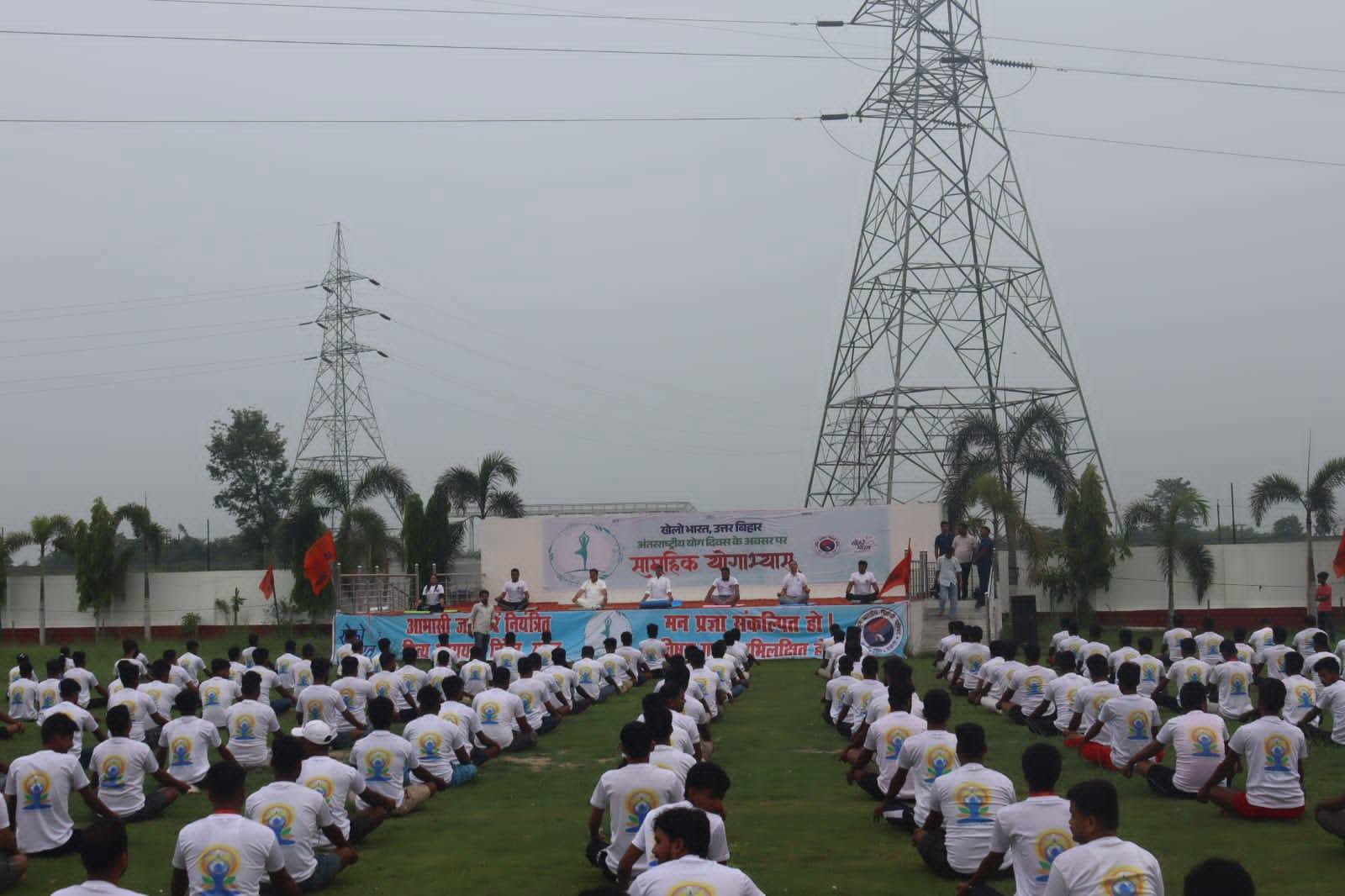
International Yoga Day is one of the biggest global recognitions and it is the contribution of Bharat to humanity throughout the ages which is celebrated through Yoga. The UN in 2014 officially recognized the practice of yoga as an International Yoga Day after the efforts of Prime Minister Narendra Modi, not only because it is a global accepted practice but also because it is an ancient knowledge tradition of India, which focuses on holistic well-being and universal harmony. This was supported by an unprecedented number of member states and marked the increasing global value of yoga as a perennial source of human welfare. Yoga is a practice that was born in Bharat’s philosophy and spirituality, and while it may now be used as a physical exercise or fitness program but is not limited to just as a physical exercise. It is a total way of life which aims for a balance among the body, mind, intellect, and consciousness. Yoga is part of traditional Indian philosophy and provides a holistic perspective on the human experience through a practice of self-control, self-regulation and moral conduct. The modern world of stress, fragmentation and ecological uncertainty so yoga brings to our attention the ancient Indian understanding of health, higher consciousness and universal welfare, which is reflected in the ethos of Indian civilization ‘Sarve Bhavantu Sukhinah’ (May all humans and all beings be happy).
Yoga in Ancient Indian Knowledge Traditions
Yoga was born from the profound intellectual, philosophical and spiritual roots of ancient Bharat and has developed to become one of the most enduring systems of holistic knowledge that humanity has to offer. Yoga is not just a way to discipline the body, it also emerged as a system of knowledge about human being and harmony between the individual and the universe. The roots of its origins lie in love of one’s higher self, disciplined living and contemplation, which found in epics like Ramayan and Mahabharat that further woven into the fabric of the Vedic literature. The Upanishads extended these concepts with a focus on self-realisation, awareness and the understanding of the oneness of the individual soul (Atman) and universal reality (Brahman). These philosophical underpinnings were eventually systematically expressed in the Yoga Sutras of Patanjali, which codified the practice of yoga into a systematic discipline of morals, mind, meditation and spiritual advancement. In the ancient Indian thought, health was not seen as a condition of non-disease, but as a state of a balance including body, mind, intellect and consciousness. This holistic perspective understood that these four aspects of human well-being as physical energy, mental lucidity, ethical behaviour, and inner balance were interrelated. Unlike many modern strategies focusing on individual and distinct areas of health, the yogic philosophy of Bharat provided a holistic perspective on health that emphasized balance, self-control, and overall wellbeing.
Bharat’s Advanced Understanding of Health and Human Consciousness
One of the unique gifts of Bharat’s civilisation is its sophisticated and holistic knowledge of health, human consciousness and the condition for meaningful living. In ancient Indian thought well-being was not just curing disease, it was about developing physical energy, mental balance, moral behaviour and spiritual understanding by making a way of life. In this context, yoga became a practical and philosophical system for achieving balance in the body, mind and consciousness. To complement this, Ayurveda also formulated rules for preventive health, which focused on maintaining balance through daily routine, diet, changing with the seasons and living in harmony with nature. Mental clarity, emotional balance, and inner resiliency were recognized as crucial abilities to be developed through practices like pranayama, meditation, and self-discipline. Humane values, such as self-restraint, truthfulness, moderation and conscious action, were seen as being inextricable from personal and social wellbeing. Issues of lifestyle well-being, stress management, mental health, and preventive care are key concerns of interest in contemporary global discourse, concerns that have been addressed for centuries by knowledge traditions in India. In this way yoga is more than a cultural practice, it is a civilizational production that found its expression in a comprehensive vision of human flourishing much earlier than it became a key obsession of the global conversation.
Yoga as Bharat’s Gift to the World as global movement
Yoga has grown into a movement that has spread across continents in the last 100 years and has become a practice of the Bharat as part of its intellectual and spiritual heritage. In present days, Yoga has found itself in a variety of social and cultural settings and is now linked to the health of the body, the balance of the mind, and living in a conscious manner globally. However, its deeper meaning is related to the overall Indian perspective of human development and inner transformation. Yoga’s universal popularity is a testament to the beauty and diversity of the Indian knowledge system. Several streams of yogic teachings are still leading people on various paths of self-cultivation and realization. All sects of yoga which were emphasised by Swami Vivekananda like Hatha Yoga is about the discipline of the body and harmony, Raja Yoga is about the mastery of the mind and meditation, Karma Yoga is about action in the name of others and doing what is right, Bhakti Yoga is about devotion and emotional purification; and Jnana Yoga is about wisdom and knowledge of Self. These traditions collectively are a full picture of flourishing humanity. One special characteristic of Bharat’s civilisational approach has always been its desire to disseminate knowledge for the mutual benefit of all and not as a personal treasure. This spirit of openness and universal goodwill is encapsulated in the universal acceptance of yoga. In this regard, Yoga serves as a significant case of India’s contribution to the common good of humankind as well as to the quest for a healthy, balanced, harmonious society. This reflects in the Bharat’s civilizational idea of ‘Vasudhaiva Kutumbakam’, which means the world as one family shows a philosophy of interconnectedness, respect and collective living. In this tradition, yoga is not just about personal health and physical practices, but also about creating a sense of harmony and peaceful coexistence in society. Yoga promotes the awareness of one’s relationship with others and with the wider human community through values such as compassion, self-discipline, self-awareness and ethical behaviour. Bharat’s international perspective has always been focused on responsibility, balance, and welfare of all people, in contrast to traditions of power which have been based on domination. Thus, yoga embodies the longstanding vision of life of the Indian civilizations that means of human progress in a country have significance only when universal harmony and common welfare is maintained.
Bharat as a Global Norm Shaper in Health and Human Welfare
The yoga represents the timeless power of Bharat’s civilisational legacy and its relevance in tackling today’s global issues. Yoga, with its vision of balance, self-awareness, preventive well-being and human flourishing is a viable alternative in today’s world of stress, social fragmentation, conflict and lifestyle related illness. It has been adopted by many countries around the world because the world has accepted that development must be sustainable and that mental, ethical and spiritual development should be accorded a place of parity with material development. But India’s contribution to the world is not just in economic growth or in geopolitical influence. It also rests on the capacity to provide enduring concepts and traditions of knowledge that foster healthier, more harmonious and more humane societies. Yoga, a living manifestation of India’s civilizational wisdom, remains a bridge between the past and the present, embodying India’s commitment to contributing to human welfare and to the common humanity of all the world.
(Author is Assistant Professor at Department of Distance and Continuing Education, University of Delhi)